

Malwarebytes
Malwarebytes
The Strategy
Malwarebytes protects people's computers and phones from viruses, scams and stolen identities. For years its marketing had leaned on ads that ask you to buy right now. This campaign was something new for them: ads for streaming TV and YouTube with one job, to make people remember the name, so it's the one they think of when something goes wrong.
The danger in cybersecurity is invisible, and most ads in the category make it visible by scaring you. Malwarebytes wanted the opposite. Show the problem, keep it funny, and never let it get dark. Every joke had to point at something the product really does. And there had to be a family in it, because so many of their customers protect a whole household.
We pitched twelve directions, and Malwarebytes picked One Click. Someone makes one ordinary click, and something absurd happens right away. The joke is how fast it all goes wrong, and how little it took.
The 30-second main ad sets up the family. Dad does step aerobics in the living room with a tablet in one hand. Mom asks if he signed up for Malwarebytes like she asked. He doesn't need to. He has a system. Then a pop-up offers him free sneakers for his Social Security number, and on the couch, their son is about to buy a thousand game tokens.
The three 15-second spots each take one part of the product. For device security, Dad sits behind a homemade malware alarm at the dining table, built from hoses, wires and a siren light. For browser protection, Mom waves crystals over her keyboard before a risky click. For antivirus, Dad folds laundry, proud that he bought the most expensive one there is.
The Process
Our first script borrowed from two other directions Malwarebytes liked, with an identity emergency kit, fake passports and quick disguises. Their team felt it leaned toward panic, so the next drafts went all in on One Click, with a parent and a kid both clicking, to show it can happen to anyone. They also asked us to drop an old sitcom habit, the nagging mom and the clueless dad. So Dad became the confident one with a plan, and Mom became the one who's right.
Malwarebytes changed the shape of the package, too. We had planned one 30-second ad, two 15-second ads and two 6-second ads. They asked for a third 15-second ad instead of the short ones. It worked so well that one 30-second ad plus three 15-second ads is now our standard package.
Brian directed, and we shot all four ads in one day, in one rented house. Nobody from Malwarebytes came to set. Our lookbook (photos of every room, outfit and prop), our casting picks and animated storyboards showed their team what we would shoot before we shot it.
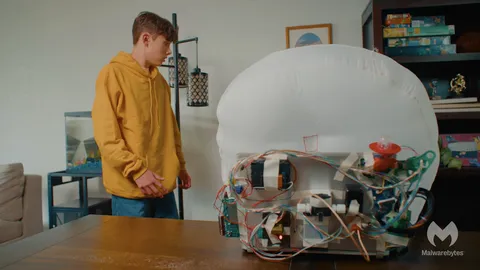
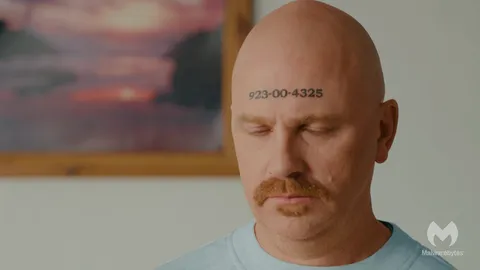
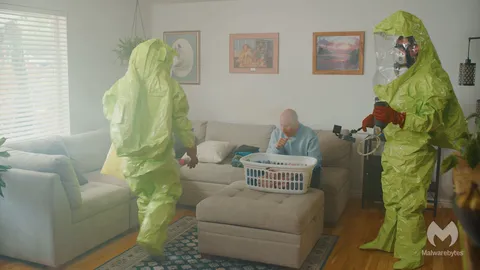
Almost every effect happened right there in the room. The airbag is a rig we first built for Loxo, refit to fire from behind the laptop. The number on Dad's forehead is a temporary tattoo, applied on set. The fish tank is real, and so are the devices at the bottom of it. The hazmat suits are real hazmat training suits we first bought for Event Farm's COVID Monster, and the haze comes from a fog machine. The one trick we saved for editing was draining the color out of the son.
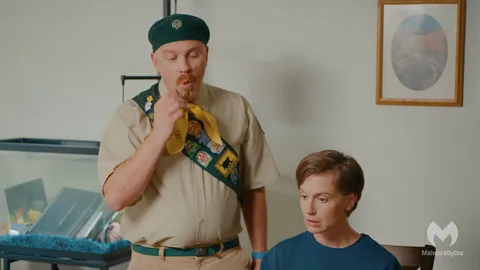
The cookie ad got one more round after delivery. When Malwarebytes shared the spots inside the company, some people missed the joke: Mom clicks yes on an "accept cookies" pop-up, and Dad, standing behind her, is suddenly in a scout uniform. We sent back five ways to fix it, smallest to biggest, from a sound effect up to a new line from the actor. They picked two small ones together. Now the laptop says "security breached," and the loading screen turns into COOKIES DELIVERED, with a bitten cookie. No reshoot and no new footage.
The Reaction
All four ads run on YouTube and streaming TV, on media Malwarebytes buys itself. The airbag ad became the favorite, inside the company and out.
“I think the hit so far is… one with the airbag. Everyone really loves it.”
 Kathy VoSenior Growth Marketer, Malwarebytes
More like this: the consumer work · LEGO’s Rebrickulous