LEGO · Rebrickulous · The Look
How the show got its face
A Show Needs A Face
A weekly series lives or dies on whether it looks like something. So before the set was finished, we commissioned the show’s identity from Imaginary Forces — the title studio behind some of the most recognisable main titles in film and television. They’re worth a look. One brief: make a word that a ten-year-old would recognise from across a room.
Eighteen Ways To Write One Word
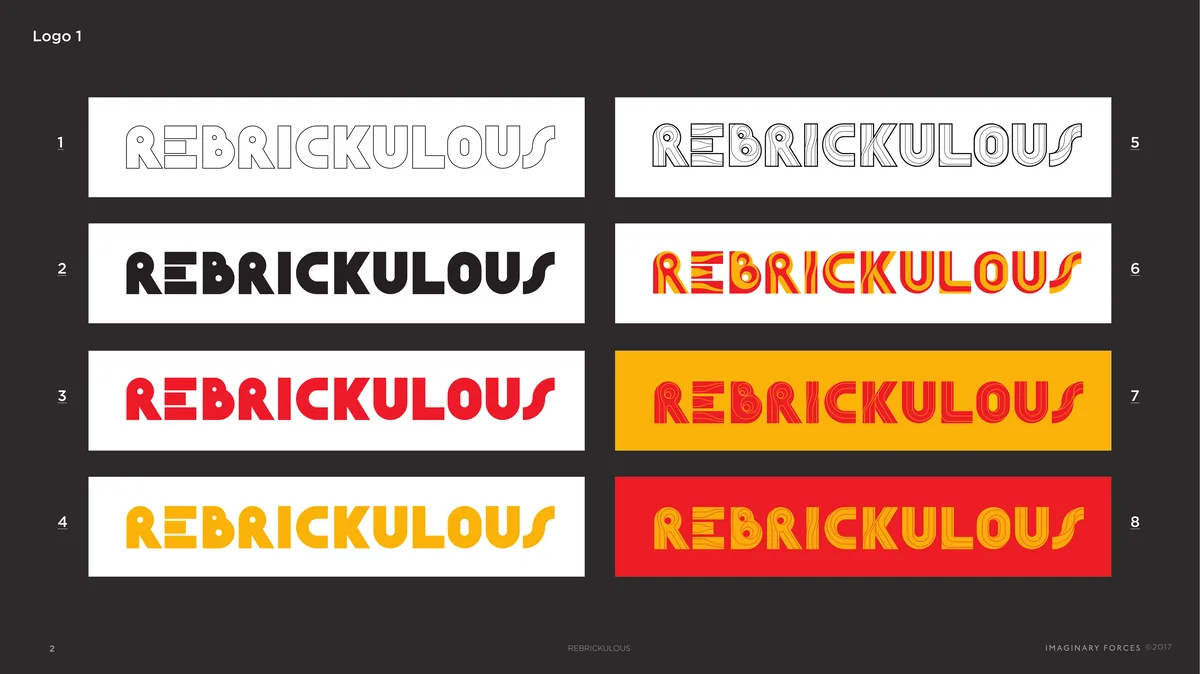
They came back with eight flat wordmarks. The letterforms stay the same; everything else moves — outline, solid black, red on white, yellow on white, red-and-yellow layered, and two reversed onto color. Number six is close to what eventually shipped.
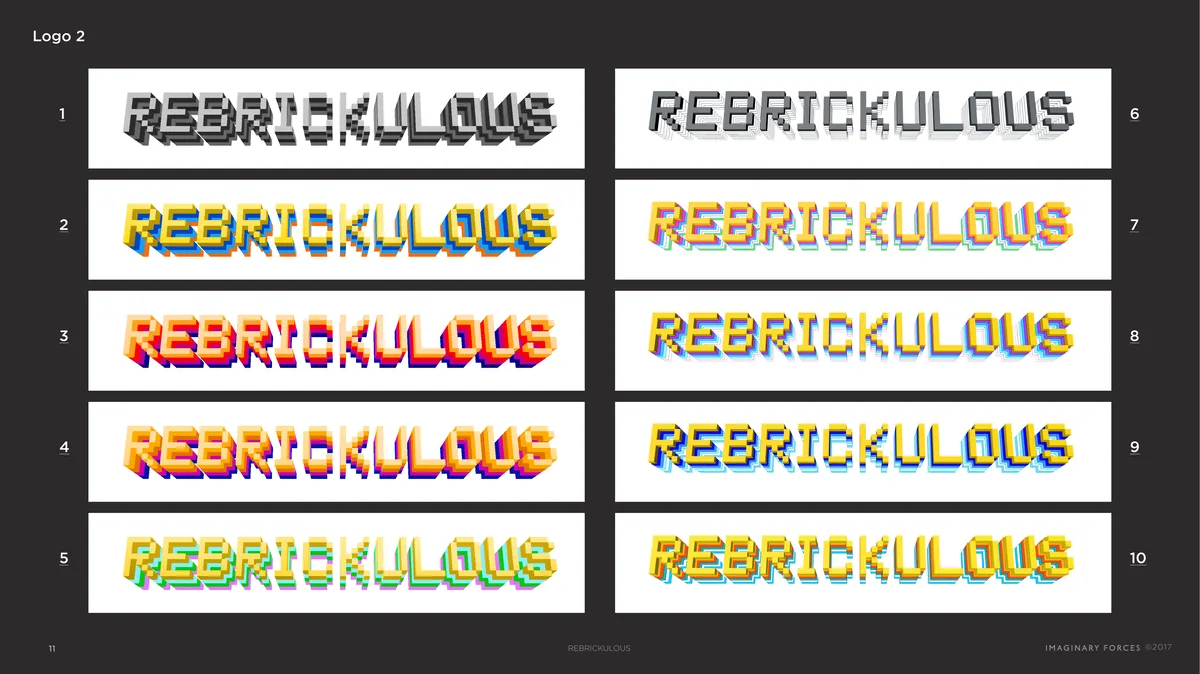
Then ten more with depth: extrusions, chrome, stacked color offsets, a version that looks like it is made of plastic. This is what paying for a title studio actually buys — not one idea defended, but the whole space explored so the choice is informed.
It Ran On A Calendar
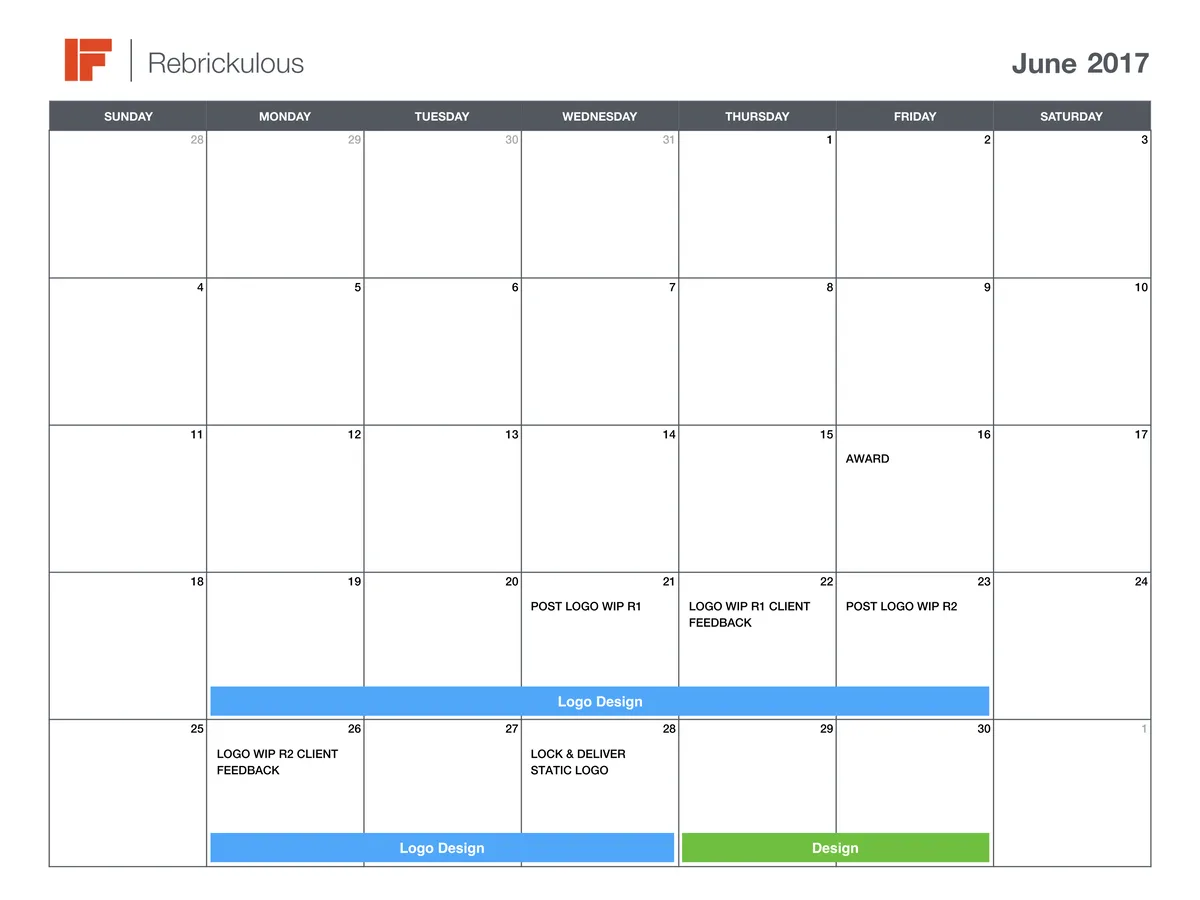
The romantic version of design is a flash of genius. The real version is a schedule. Here is June 2017: logo design, post a work-in-progress, client feedback, post the second round, feedback again, then LOCK & DELIVER STATIC LOGO, and only then does animation design begin.
What It Looked Like Moving
Eight seconds, built out of the show itself: a LEGO goalie taking a shot, and the wordmark landing in red with the layered offsets behind it.
And Then We Cut It
Here is the uncomfortable part, and it is the reason this page exists. That sequence was twenty seconds long, and it was beautiful, and we had paid a world-class studio to make it. Then the retention data showed kids leaving during it — every episode, at the same place.
So we cut it to about four seconds. Our own production records, 2017–2019.
Nobody enjoys that meeting. But an intro is not a trophy, it is a toll you charge the audience before the thing they came for, and the data said the toll was too high. Keeping it would have been a decision about our feelings, not about the show.
That is the whole method in one edit: hire the best people, commission the best work, and still let the audience overrule all of it. Everything we do now runs on that.
More of the story: Rebrickulous, start to finish