


LEGO · Rebrickulous
Rebrickulous
Crazy LEGO Rube Goldberg Machine
18M views
INSANE 24-Hour LEGO Game Night Challenge
15M views
LEGO Mini Golf Round 2: Every Win = Increased Difficulty
10M views
LEGO Life Hacks: Genius Builds or Complete Busts?
8.3M views
LEGO EPIC Corn Maze Challenge
6.4M views
100,000 LEGO Bricks in Car Prank
6.2M views
The series we produced was a 2019 Webby Awards Nominee — Video, Series (Branded). The Webby Awards. Entrant of record: The LEGO Group.
The Problem LEGO Handed Us
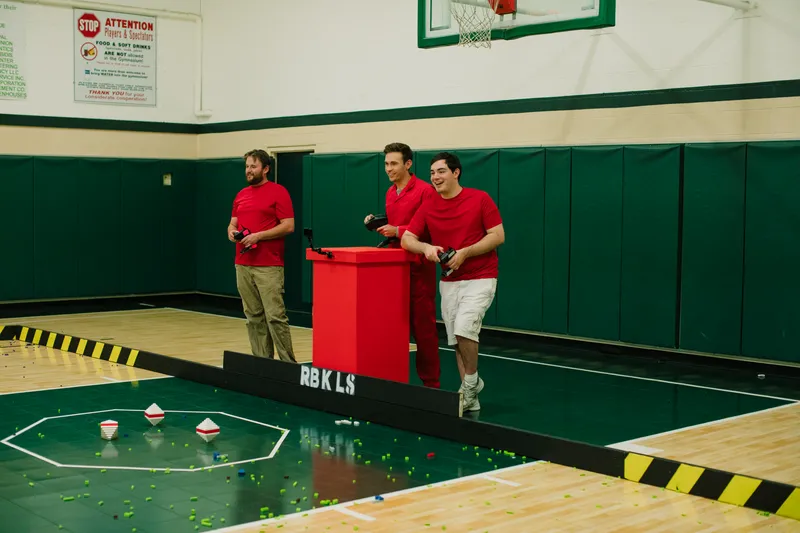
LEGO had a gap, and they told us about it: boys aged ten to fourteen who did not already own a pile of bricks. Kids inside the LEGO universe were easy to reach. New ones were not — and at that age, ads are the fastest way to get ignored. So the pitch we sent back to their 2017 request for proposals refused to sell anything. Make a show. Make it genuinely fun. Never tell a kid to buy a brick — let the show make building look so good that they ask for LEGO on their own. And give the parents something in the same stroke: a screen their kid could copy things from — games for a rainy day, a science trick, something to build. LEGO said yes. The show was called Rebrickulous — RBKLS on the set signage — and it ran on LEGO’s own channel week after week for two and a half years, from mid-2017 to the end of 2019.
The Bet
The timing made it a real bet. 2017 is the year working with online creators stopped being fringe: that April, the FTC sent its first-ever letters to social-media influencers about disclosing brand deals. Influencer marketing was a $3 billion industry that year; by 2022 it passed $16 billion. FTC.gov, 19 Apr 2017; Statista, global influencer market size. Back then, brands mostly used YouTube to run ads. A brand funding a weekly entertainment show on its own channel was the kind of move marketing trade press now calls the next big thing. LEGO placed that bet eight years early. Digiday, Oct 2025: “branded entertainment seems to be making a comeback.”
We put numbers on ourselves before a frame was shot. The proposal named what winning would look like: at least 500,000 to 750,000 views per episode within six weeks, a 15–25% lift in subscribers to LEGO’s channel over the season, and an average view duration of 65–75%. Our May 2017 proposal to LEGO. Most agencies will not write that down in advance. It is the same instinct behind making the first ad free: if the work has to earn its place, say so up front and then go and prove it.
We Didn’t Book Influencers. We Built Them.
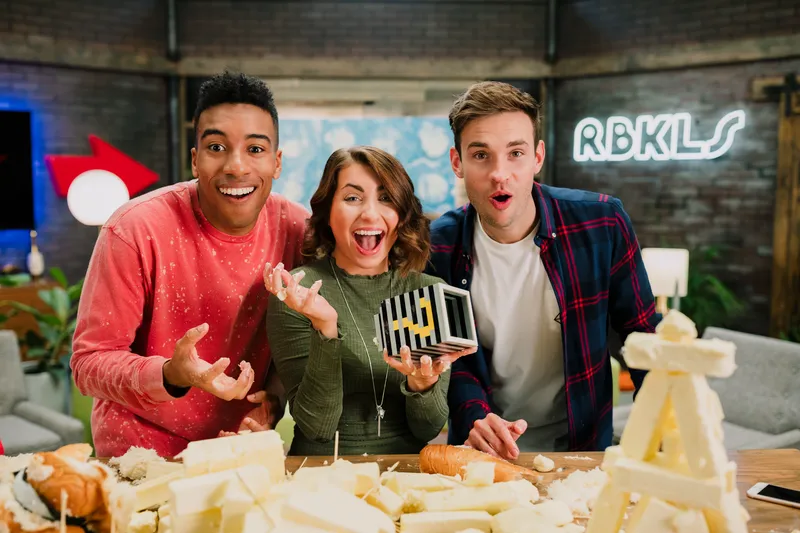
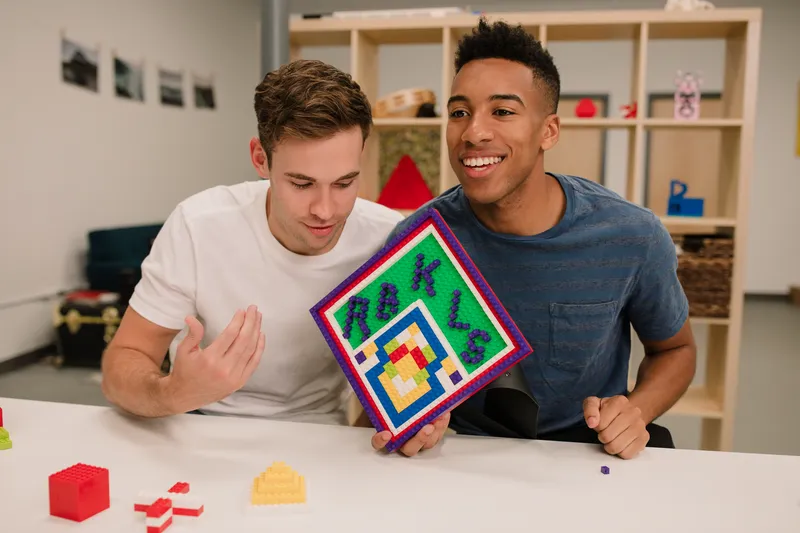
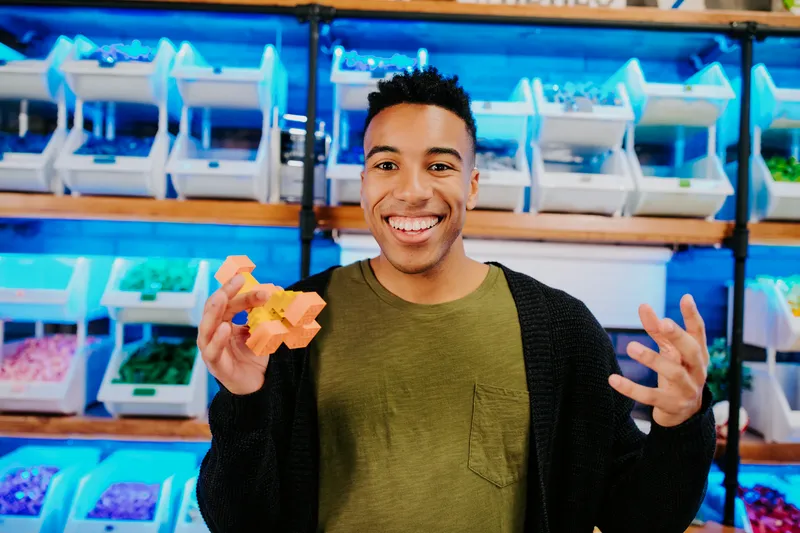
No stars came attached to this show. We found the hosts, cast them, and trained them. There was a written host bible: how to work an episode outline, how to talk to a camera like it’s a person, how to hand a moment to your co-host instead of stepping on it. After every shoot, the hosts watched their own cut back and read the comments. That discipline is how unknowns carried a weekly show for two and a half years.
It worked well enough that real creators started showing up as guests: Marshmello, Chad Wild Clay, DevinSuperTramp, JuJu Smith-Schuster, Fulham FC, Hevesh5, Team Edge, King of Random, Andrew Huang, Braille Skateboarding, How Ridiculous, MOREJSTU and the Dangie Bros. In 2018, LEGO took the show to VidCon with thirteen creators, and Google sponsored the push. PR Week case study, Nov 2018 — production credit: IndieWhip, our studio’s name at the time. The show became LEGO’s training lab for the whole creator question: how to work with influencers, how to cross-promote so two audiences grow at once. Every collaboration taught the next one.
Then LEGO Put Them On A Stage
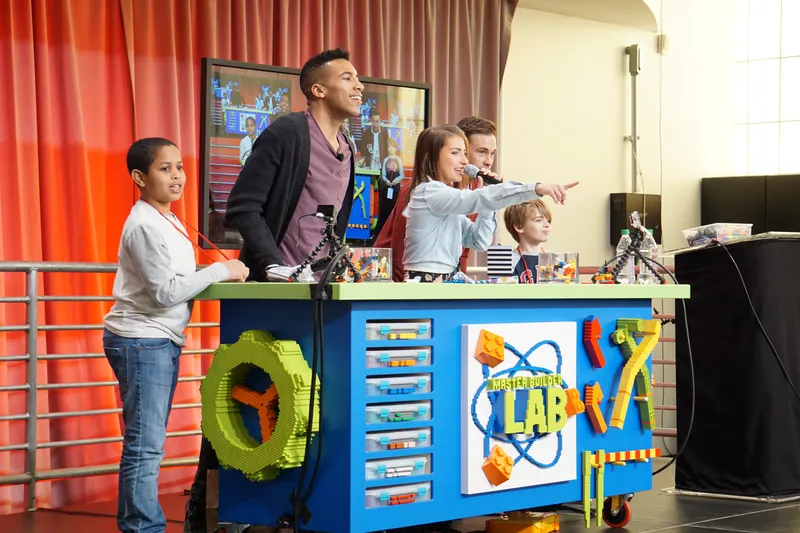
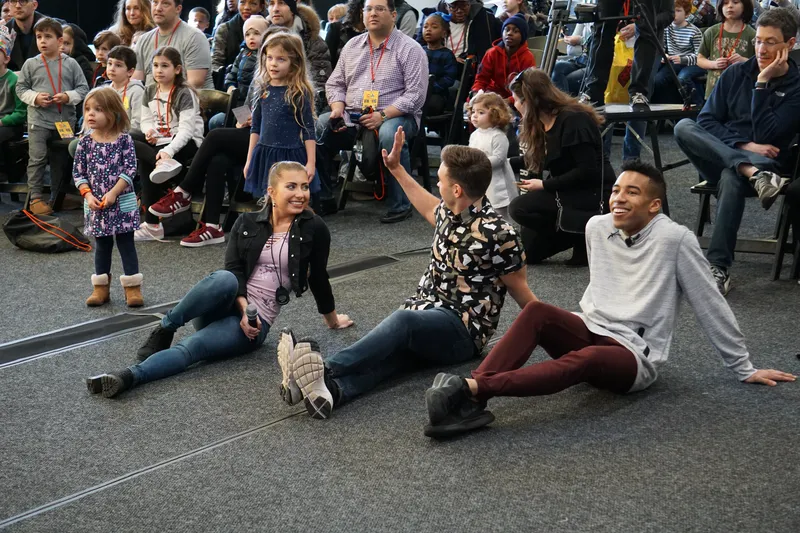
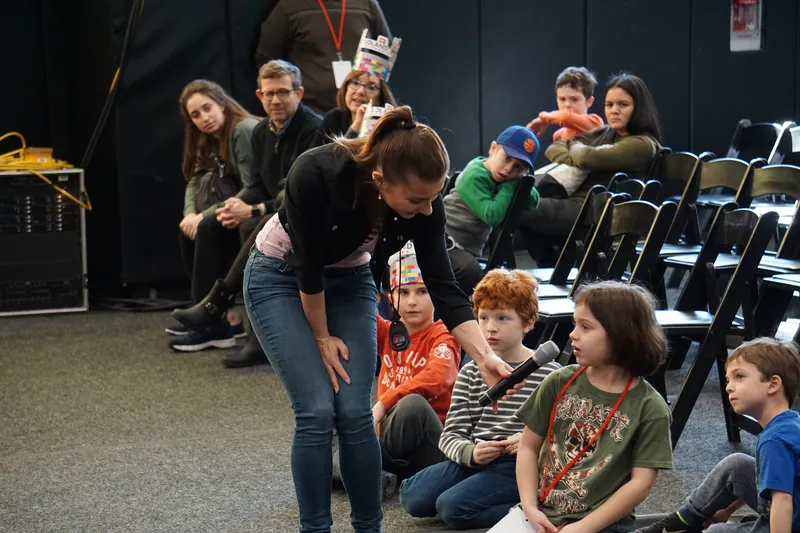
In February 2018 LEGO held its first LEGO Live event in the United States: three days at Pier 36 in Manhattan over Presidents’ Day weekend. For the first time at any LEGO event, the company put YouTube stars on a live stage — and it billed our show among them, alongside established names like Ali-A and Vikkstar. LEGO’s own event site, archived 16 Feb 2018: “For the first time at a LEGO event, LEGO LIVE NYC will feature YouTube stars live on stage all weekend long. YouTubers scheduled to appear: Rebrickulous; BOOST Team from The TTV Channel; Ali-A; Clare Siobhan; and Vikkstar.”
Less than a year after the first episode, the hosts nobody had heard of were running a live game show for a hall full of families, pulling kids out of the audience to build on stage. That is the whole argument for building your own talent, settled in public.
And One Of Them Walked Into The Record Books
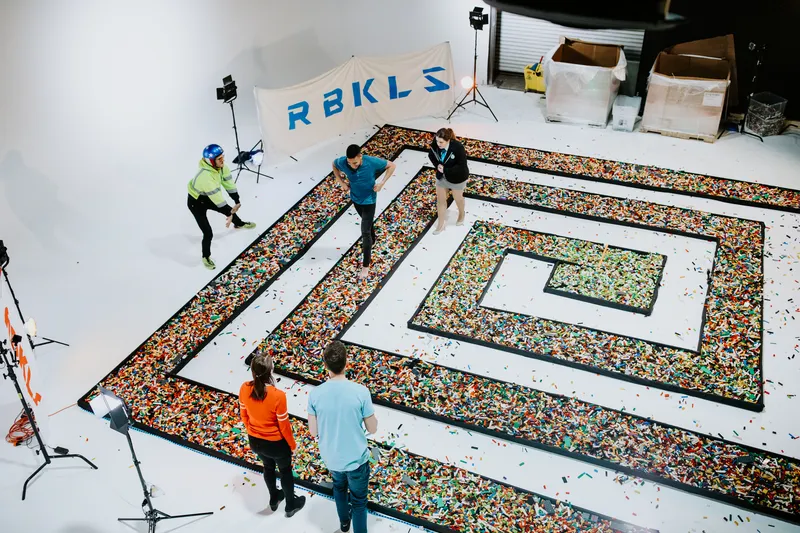
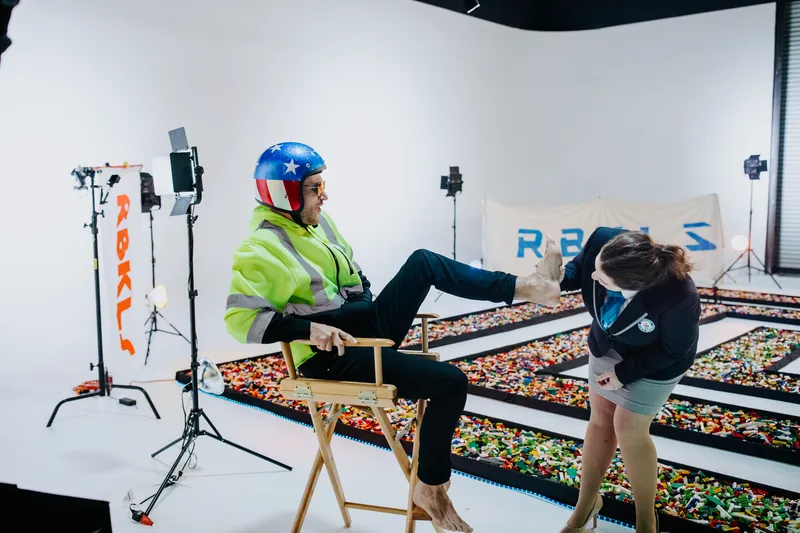
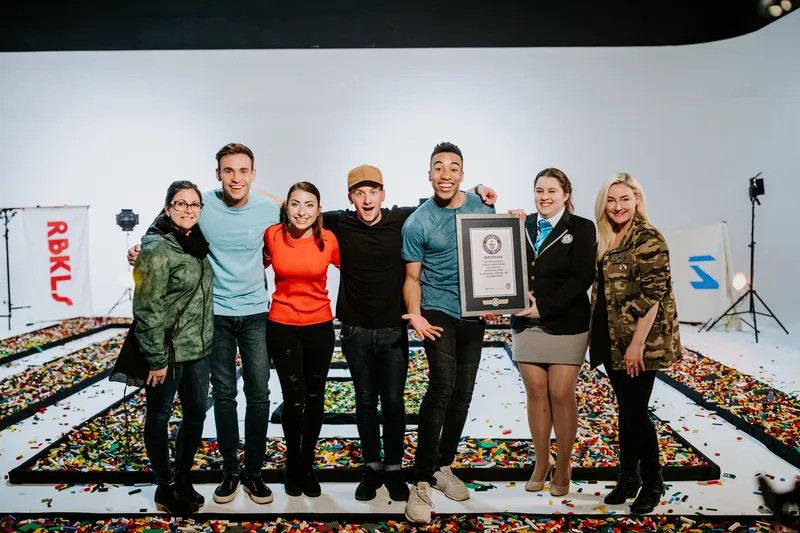
Two months later we built a course out of loose LEGO bricks on a white cyc and one of the hosts walked it barefoot. He kept going for 385.2 meters, about four football fields laid end to end, and it took the world record off Dude Perfect, who had managed 44.78 meters. An adjudicator was there to measure it. Guinness World Records, 6 April 2018: “Farthest distance walking barefoot on LEGO™ bricks”. The title belongs to the host who walked it, not to us — we made the episode.
Nobody was asked to buy anything. That is a LEGO advertisement that a child would watch twice.
A Real Set. A Real Crew. A Dog.
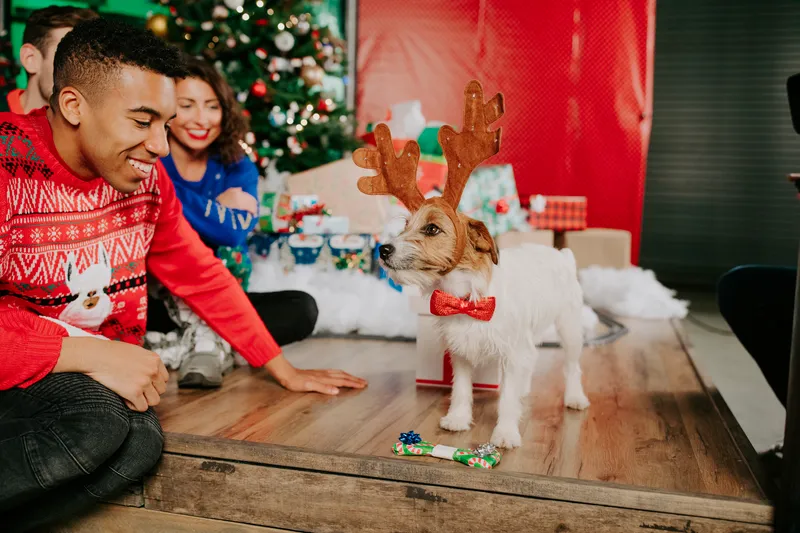
We built the show a home: a standing set with its own neon sign, a brick library sorted into bins, and a build table that took a beating every week. When an episode needed more room, we took the show out — school gyms, parking lots, parks, city streets, and eventually the world: a scavenger hunt inside LEGO House in Denmark, a shootout with Fulham FC in London. LEGO’s Rebrickulous playlist: the LEGO House and Fulham FC episodes sit at 3.0M and 2.0M views. It shot like television: two handheld cinema cameras, a locked-off wide, GoPros buried in the builds. Every week we delivered a full episode or up to four segments, plus a promo film and a promo still. And the first season had a dog actor — a Jack Russell. Paid in treats.
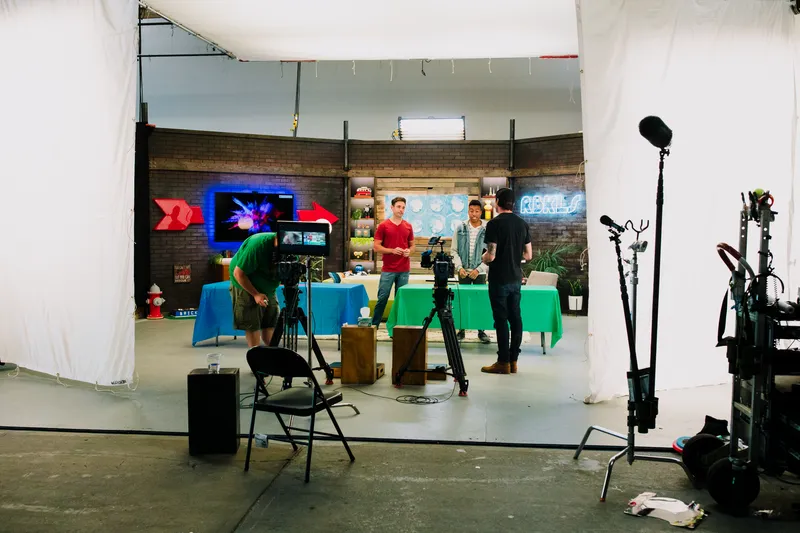
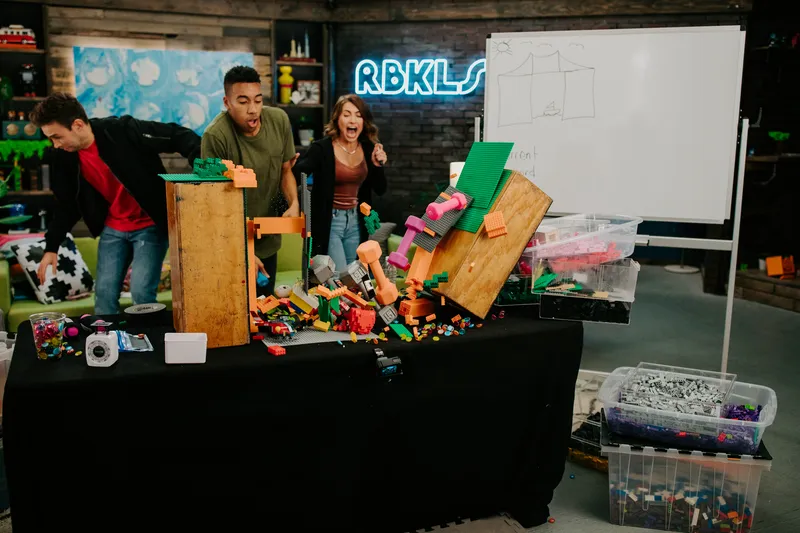
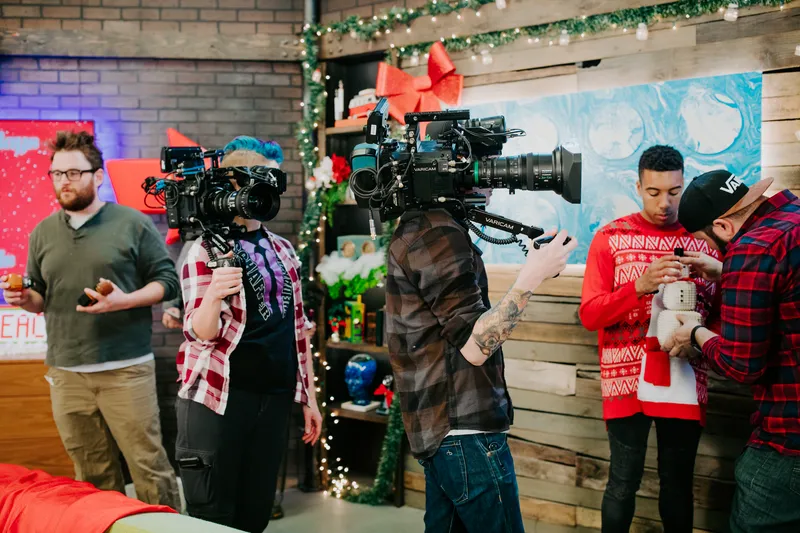
That set started as a pencil sketch and ended as a standing build in a warehouse, and we still have every step. How the set got built →

Then We Moneyballed It
Here is the part that built everything we do now. A show on YouTube hands you something television never gets: data on every minute of every episode, every week. We poured through it and let it pick the show. And we were not reading it alone — Google was the show’s ad partner, running the promotion and feeding our team insight on the content itself. The test-and-learn method we still use was built alongside them. Our own record of the engagement.
Start with the shape of the thing. We pitched LEGO a fifteen-to-twenty-minute weekly variety show, modelled on late-night television. Within two months the plan had been taken apart and rebuilt: segmented content buckets instead of one long episode, and three releases a week instead of one — Monday, Wednesday and Saturday — specifically because segments gave us room to test and learn. Our May 2017 proposal to LEGO and the 3 July 2017 alignment document.
Then the buckets themselves. We ran different kinds of episode at once and watched what held. Three won — pranks, science challenges, games — and we doubled down until those three were the show. You can still see it in the playlist: the top episodes are almost all pranks, games and build-offs. LEGO’s Rebrickulous playlist, all 154 entries committed in this site’s own data, 21 Sep 2026.
Even the advertising got rewritten. The obvious way to promote an episode is to cut a trailer. We tested running the whole episode as the ad instead — and it beat the trailer, while saving the post-production time a trailer costs. Our own write-up of the show.
The retention graphs rewrote the small things too. Viewers dropped when a full-screen graphic went up, so full-screen graphics went away. They stayed when a host looked straight down the lens, so eye contact stopped being a note and became a written rule: our post-production bible tells editors to keep cuts to the second camera brief and sparing, because holding the viewer’s eye is what keeps them there. RBKLS Post-Production Bible, 2019. Every episode opened cold, teasing the payoff before any titles. And the title sequence got cut to the bone. We had commissioned it from Imaginary Forces, the studio behind some of the best main titles in film and television, and it was beautiful. They’re worth a look. It was also twenty seconds long, and the data said kids were leaving during it. We cut it to about four. Our own production records, 2017–2019. The logo, the title sequence, and the cut → That is the whole discipline in one decision: nothing on the show was too expensive, too pretty or too finished to change when the numbers said so. The data from every episode made the next one stronger.
It Got Cheaper as It Got Bigger
Most productions get more expensive as they grow. This one went the other way, because we turned production into a system — almost formulaic, in the good sense. The 2017 proposal put about forty people on it, cast and crew, and the 2018 budget staffed twenty-nine positions. By the end a crew of about eight was making a better show, faster. And the audience mix flipped: early on, roughly 80% of viewers reached the show through paid promotion and 20% found it on their own. By the end, that was reversed — about 20% paid, 80% organic. The forty and the twenty-nine are in our own 2017 proposal and 2018 production budget. The final crew size and the paid-to-organic shift are our own count, not a document. All of it is ours, not a third party’s. Spend less, get more, because every round of data sharpens the next round of work. Remember that sentence; it comes back at the end of this page.
The Egg Drop
The science bucket had a quiet superpower. Drop an egg from height. Build a LEGO rig to keep it whole. That is a physics lesson wearing a game costume, and the two egg-drop episodes have passed eight million views together. LEGO Egg Drop Challenge, parts 1 and 2: 5.1M + 3.1M views, LEGO’s YouTube channel, 21 Sep 2026.
Teachers found those episodes. They told us so in the comments — they were opening physics lessons with the show. You’ll have to take our word for that one, and we’ll tell you why: YouTube switched off comments on all made-for-kids videos in January 2020, after the FTC’s children’s-privacy settlement, and the old threads are gone. FTC v. Google/YouTube COPPA settlement, Sept 2019; made-for-kids rules live Jan 2020. A brand can buy a spot in a commercial break. It cannot buy its way into a physics class. Entertainment that is genuinely useful gets carried into rooms where ads are not allowed — and the brand rides along. Which is exactly what LEGO asked for on day one: don’t sell to the kids. Make them want to build.
The Numbers
The top 100 episodes alone have passed 285 million views on LEGO’s channel, and that is a floor, not a total: the playlist sorts by views, the hundredth episode sits at a million, and every episode below it only adds to the count. The biggest, Crazy LEGO Rube Goldberg Machine, is at 18 million. More than ninety episodes have passed a million views each. It was not one lucky hit; it was a series that kept getting stronger for two and a half years, on the channel that went on to become the most-viewed brand channel on YouTube. Views: LEGO’s YouTube channel, 21 Sep 2026. Channel rank: 10.4B views, most-viewed brand channel, June 2020 press coverage.
The strategy got noticed from outside, too. Writing in January 2020, just after the show wrapped, the marketing executive Brendan Gahan called LEGO the savviest brand on YouTube for exactly this reason: it does not chase one-off hits, it invests in recurring series — and he named Rebrickulous as one of them. Brendan Gahan, “Lego is the savviest brand on YouTube”, 15 Jan 2020: “they put the bulk of their efforts into several hub series.”
The Webby
The series we produced was a 2019 Webby Awards Nominee for Video, Series (Branded). The entrant of record is The LEGO Group, and a Webby Nominee is one of roughly five finalists chosen from around 13,000 entries. It lost that category to Wistia’s One, Ten, One Hundred, a series about what production value buys, which is the same argument this site makes.
This Is Where Video Brothers Comes From
Everything on this site is Rebrickulous, grown up. We came out of it with two beliefs, and we built a company on both.
**Production is a system, not a series of one-offs.** Build the process, read the data, let every piece inform the next, and the work gets cheaper and better at the same time. Twenty-odd crew became eight. Paid promotion became word of mouth. That is not a kids’-show trick and it has nothing to do with bricks. It is the reason we can make your first ad for free and still stand behind it.
**The ad that works least like an ad wins.** We never once told a kid to buy a LEGO set. We made something worth their Saturday, and they decided by themselves that they wanted more LEGO. That is the whole play, and Christopher Nolan named it better than we can: the idea has to feel like it was theirs. Push it on someone and they push back. Let them arrive at it and they defend it.
People assume that only works for toys. It does not. The same rule is why a security-questionnaire platform let Satan take the credit, and why a recruiting company opened a fake wellness clinic — both on our B2B side, both built on earning the attention before asking for anything. A consumer brand and a software company are buying the same thing from us: the minutes before the pitch. We spent two and a half years and 285 million views learning how to earn them.
285M+
Views across the top 100 episodes
LEGO’s YouTube channel, 21 Sep 2026; a 2024 reboot made by others is excluded140+
Episodes over 2.5 years
Q2 2017 to Q4 2019, LEGO’s Rebrickulous playlist18M
Views on the biggest episode
Crazy LEGO Rube Goldberg Machine, LEGO’s YouTube channel385.2 m
The world record barefoot walk across LEGO bricks, set on the show — the previous best was 44.78 m
Guinness World Records, 6 Apr 2018. The title is the host’s, not ours.
More like this: the consumer work